
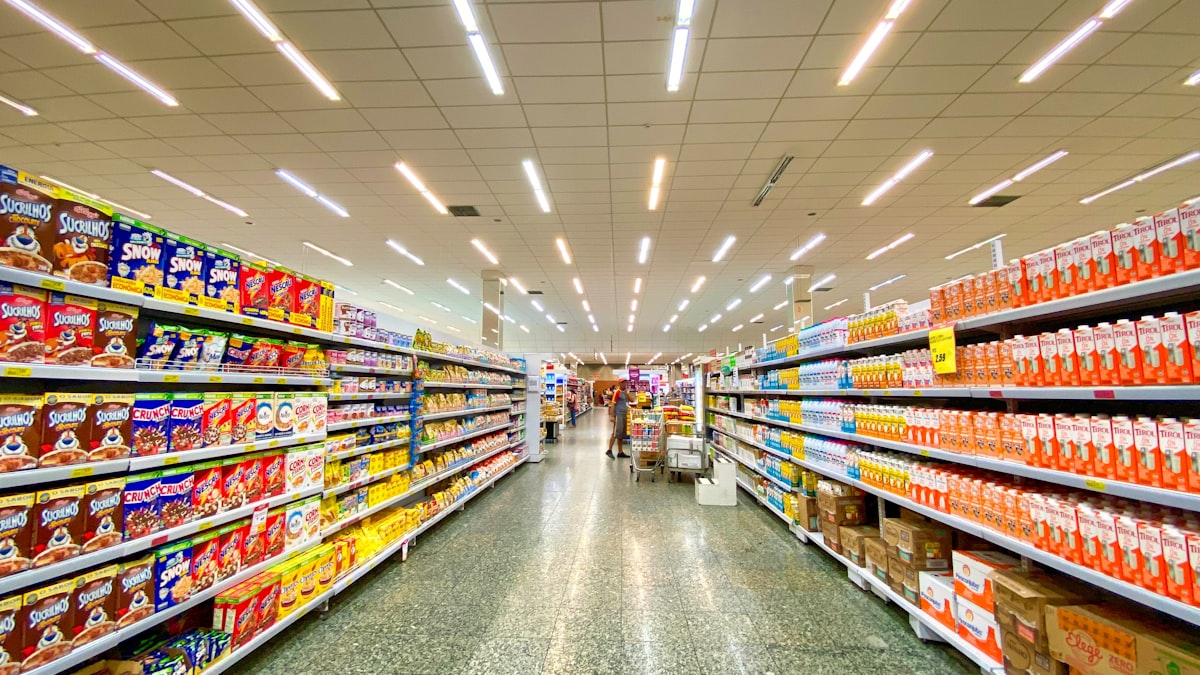
There is a paradox anyone in retail knows well: theft and unpleasant incidents almost never happen at rush hour. They happen on a Tuesday at 3pm, when there is one person on the floor, the radio is filling the silence and everyone's head is in the stockroom. Fewer customers does not mean less risk. It means fewer eyes.
The point is not to treat every quiet hour as a threat. It is to notice that the rota usually only thinks about expected footfall, and never about who is watching the entrance when the footfall is not there.
The legal minimum is not the sensible minimum
When hours get cut, the usual question is "how many people do we need to serve customers?". There is a second, rarer one: "how many do we need so that nobody is alone in a blind spot?". Sometimes the answer is the same. Sometimes it is not, and it is better to find out before an incident rather than after one.
If a slot has to stay thin (lunch break, deliveries, stocktake), decide explicitly how you compensate: door visible from the back, an entrance chime, a visual round every so often. These are simple tricks, but they only work if someone has actually been given the job.
Distraction is not a staff defect
In empty hours the mind wanders. That is human, not indiscipline. Which is why a concrete routine ("every half hour, walk the floor and glance at the window") works better than a vague "stay alert". Routines survive boredom; reminders do not.
Rotating tasks helps too: someone who has spent two hours labelling at the back of the shop is not the right person to notice who has walked in and out three times without buying anything.
Say who is up front, always
In busy moments roles assign themselves: there is a queue, everyone knows their place. In quiet moments it needs saying: who is "front of house" right now? Who responds if someone walks in while the other is in the back? One line on the plan or a quick agreement at the start of the shift is enough. What matters is that the question never goes unanswered during the exact hours when the answer counts.
Keep a log of the small stuff
One last useful habit: write down the near-misses too (the person loitering oddly, the distraction attempt at the till). Not to feed anxiety, but because three notes about the same time slot in a month tell you something no single person's memory would piece together. They also give you real arguments when deciding where the hours go next season.
Most of this boils down to one thing: always knowing who is in, where, and doing what, even during the hours when "nothing ever happens". A clear schedule everyone can see, like the one in Sked Solve, is the natural starting point. The site shows how it is built for stores like yours.