
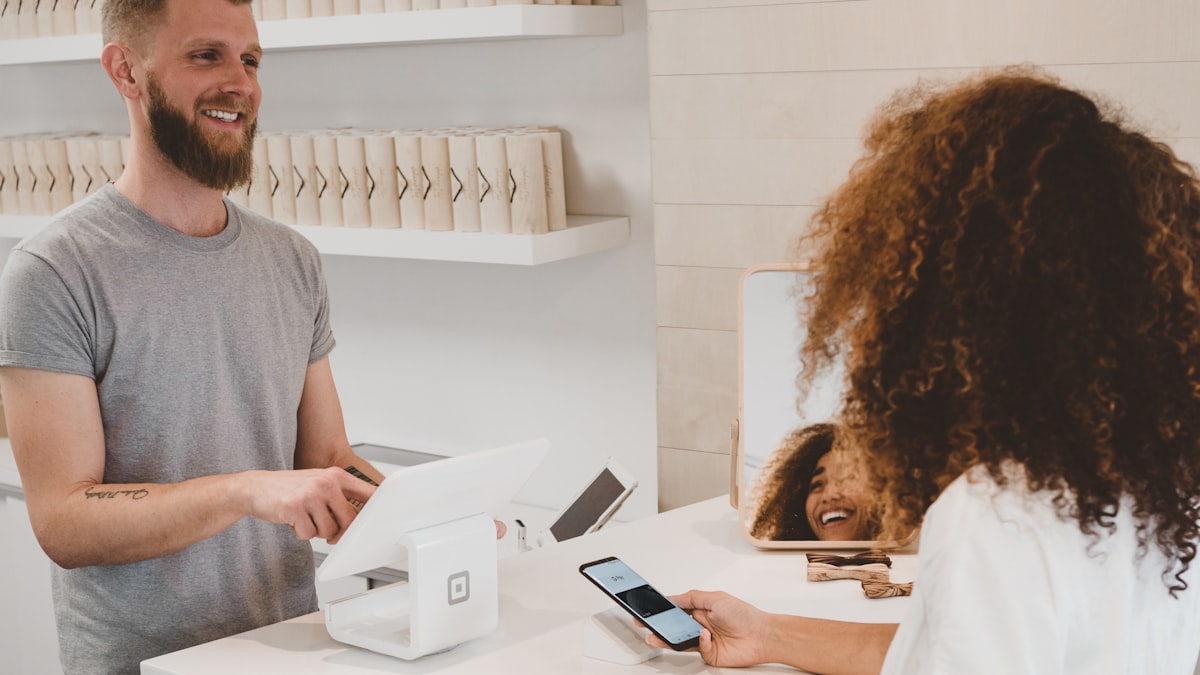
The lady who buys the same three things every Thursday and wants the small bag. The customer who always orders under the company name and needs the invoice done a particular way. The kid who comes in to pick up his mother's parcel. None of this is written down anywhere, and when the person who knew it changes shift, department or job, the customer notices on their very first visit.
The instinctive reaction is to promise "more stability": same people, same hours, forever. Modern retail cannot keep that promise, between part-timers, seasonal staff and natural turnover. The right question is different: how do you build continuity when people inevitably change?
Continuity belongs to the store, not to individuals
The real step up happens when knowledge about regulars stops being personal property and becomes the store's property. You do not need a CRM: in most shops a notebook at the counter or a shared note is enough, holding the ten things "everyone must know". The Thursday lady's preferences deserve a consultable home just as much as the delivery schedule does.
The test is simple: if your most experienced colleague won the lottery tomorrow, how many regulars would the store still recognise at first sight?
Shifts can help, if someone thinks about it
Without freezing everything, a few calendar habits go a long way: avoid clustering all the new faces into the same shift, make sure at least one experienced presence overlaps the regulars' time slots (the small-town Saturday morning, the trade-customer hours), and never rotate the whole team in the same week.
Think of it as a relay: customers accept a new face perfectly well when someone they know is still around for a while. What they struggle with is a store that is entirely unrecognisable from one month to the next.
Introduce people, do not just replace them
A detail that costs nothing and is worth a lot: when someone new starts, their first weeks alongside an experienced colleague are also for "inheriting" the customers. It is not technical shadowing, it is social shadowing: "this is Marco, you'll see him at the counter from September". It sounds like nothing, but it turns the change from an interruption into a handover of the baton.
It works on the way out too: a person leaving with decent notice can bequeath their customer notes instead of taking them away in their head.
Tone can be trained
One last thing: perceived continuity is not only names and preferences, it is tone. How people are greeted, how returns are handled, how much give there is on small requests. If those things depend on the mood and personal style of whoever is on shift, the store "changes personality" with every staff change. Three written lines of service rules, discussed once with the team, hold the tone steady even while the faces change.
The calendar side (who is in, at which times, with what mix of experience) is easier to govern when shifts are visible and planned deliberately: that is what Sked Solve does, and the site shows how it works.