
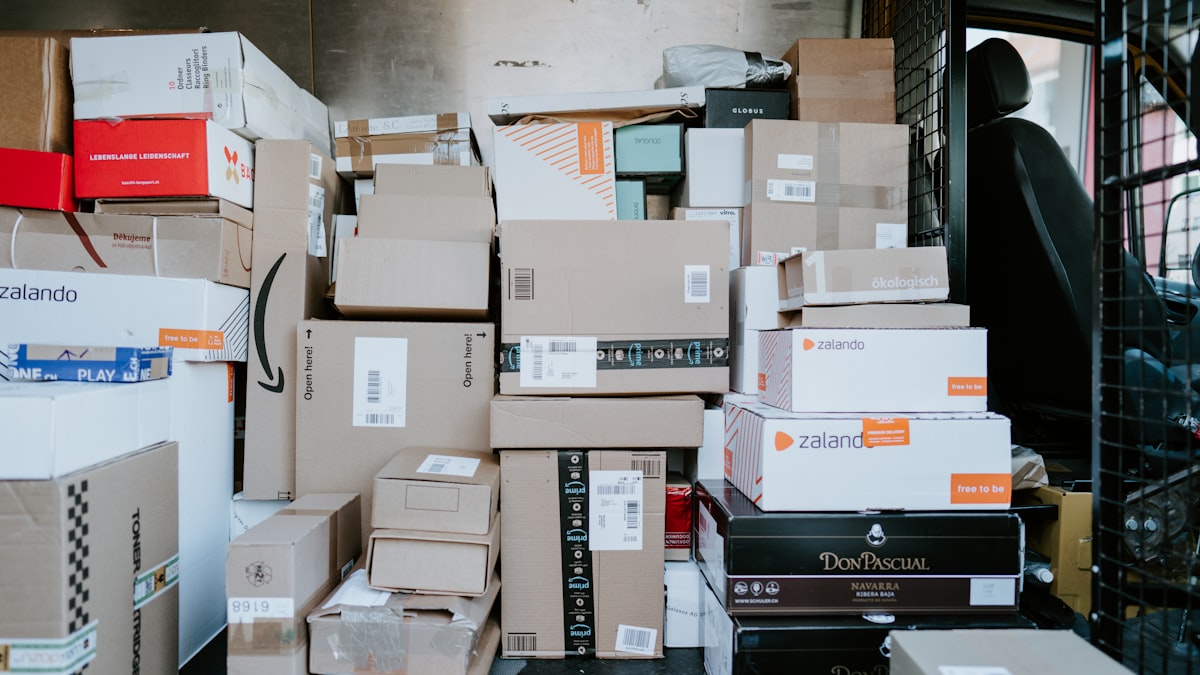
There is an unwritten law of retail: the courier always arrives at the worst moment. At 11:20 on a Saturday, while the queue at the till turns the corner. Never on Tuesday at 3pm, when the store is empty and two people are bored. Partly that is perceived bad luck, partly it is not: delivery rounds genuinely coincide with busy hours, because everyone works the same hours.
The point is that a delivery is not just any interruption. It occupies hands, blocks the door or the backroom, demands signatures and checks, and meanwhile the floor goes uncovered. Treating it as a random event to be endured, when it is largely predictable, is a luxury small stores cannot afford.
Deliveries have schedules: use them
Almost all recurring suppliers run regular rounds: fresh goods early morning, the national courier late morning, the wholesaler on Thursday. One month of notes is enough to discover your real delivery timetable. That map is gold for the rota: if two deliveries land on average between 10 and 12 on Thursdays, that slot needs an extra pair of hands, or at least easily interruptible tasks.
With your most important suppliers you can go a step further: agree on windows. Not everyone accepts, but many do, especially local ones. Moving the wholesaler from Saturday 11am to 8:30am changes the quality of the whole week.
One delivery, one owner
When the back door buzzes, who goes? If the answer is "whoever happens to", two things follow: either two people go (and the floor empties), or nobody goes and the courier waits, huffs, and sometimes leaves. The healthy rule is that every shift has a designated receiving owner who knows where goods go, what gets signed and what gets checked.
That does not mean they do everything alone. It means they decide. It is the difference between a managed interruption and interrupted management.
Checks happen in two stages
The classic mistake in front of a rushed courier: signing everything blind, or the opposite, blocking the door for twenty minutes counting parcels while a customer waits. The correct practice sits in the middle and has two stages: on the spot you verify only the parcel count and visible condition (dents, damp), noting it on the delivery slip; the contents check happens later, in the first quiet block, within the claims deadline.
Writing this down as a procedure takes the anxiety off whoever signs: nobody has to choose between keeping a customer waiting and accepting goods sight unseen.
Unloaded is not shelved
Last trap: considering the delivery finished when the parcels are in the back. In reality a second task has just been born, restocking, and someone will have to do it. If it has no assigned time in the plan, it piles up: the backroom clogs, the shelves develop gaps, and the classic "we have it but can't find it" burns real sales.
Big delivery days should carry, right in the rota, their own put-away block. It is the tail of the same task, not an extra.
Putting recurring delivery windows and the cover they need onto the calendar is a job for a tool, not for memory: Sked Solve exists for exactly this, and the site shows how it works.